The Zettelkasten Method: How to Turn Forgotten Notes into a Living Network of Ideas
1. What Is the Zettelkasten Method?
Maybe this sounds familiar: you've taken so many notes that all those little things you once jotted down have grown into a tangled mess.
Eventually, you stop going back to them. There are so many notes, and finding something useful—or seeing how one idea connects to another—feels like too much work.
I've been taking notes for thirteen years. Over that time, I've tried all kinds of apps: Evernote, Youdao Cloud Note, Notion, Obsidian, and the humble memo app on my phone. But it wasn't until recently that I came across a method called Zettelkasten.
The word Zettelkasten comes from German:
- Zettel means a slip of paper or a small card.
- Kasten means a box or container.
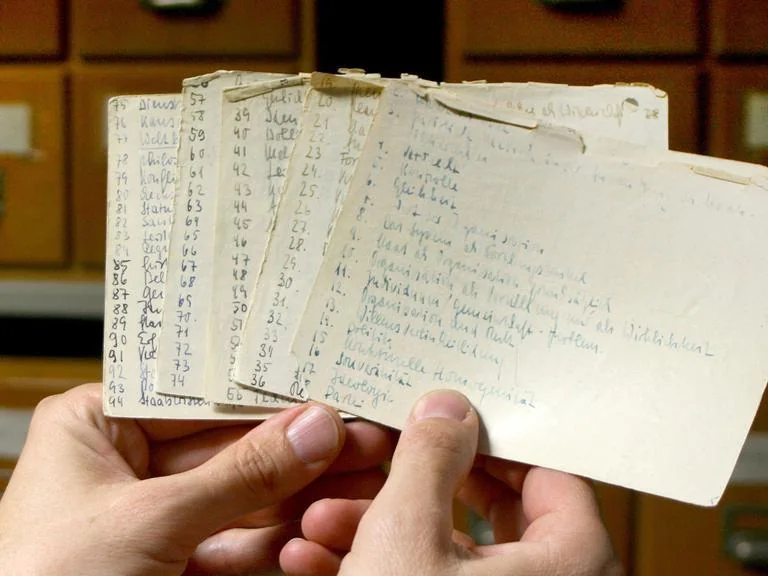
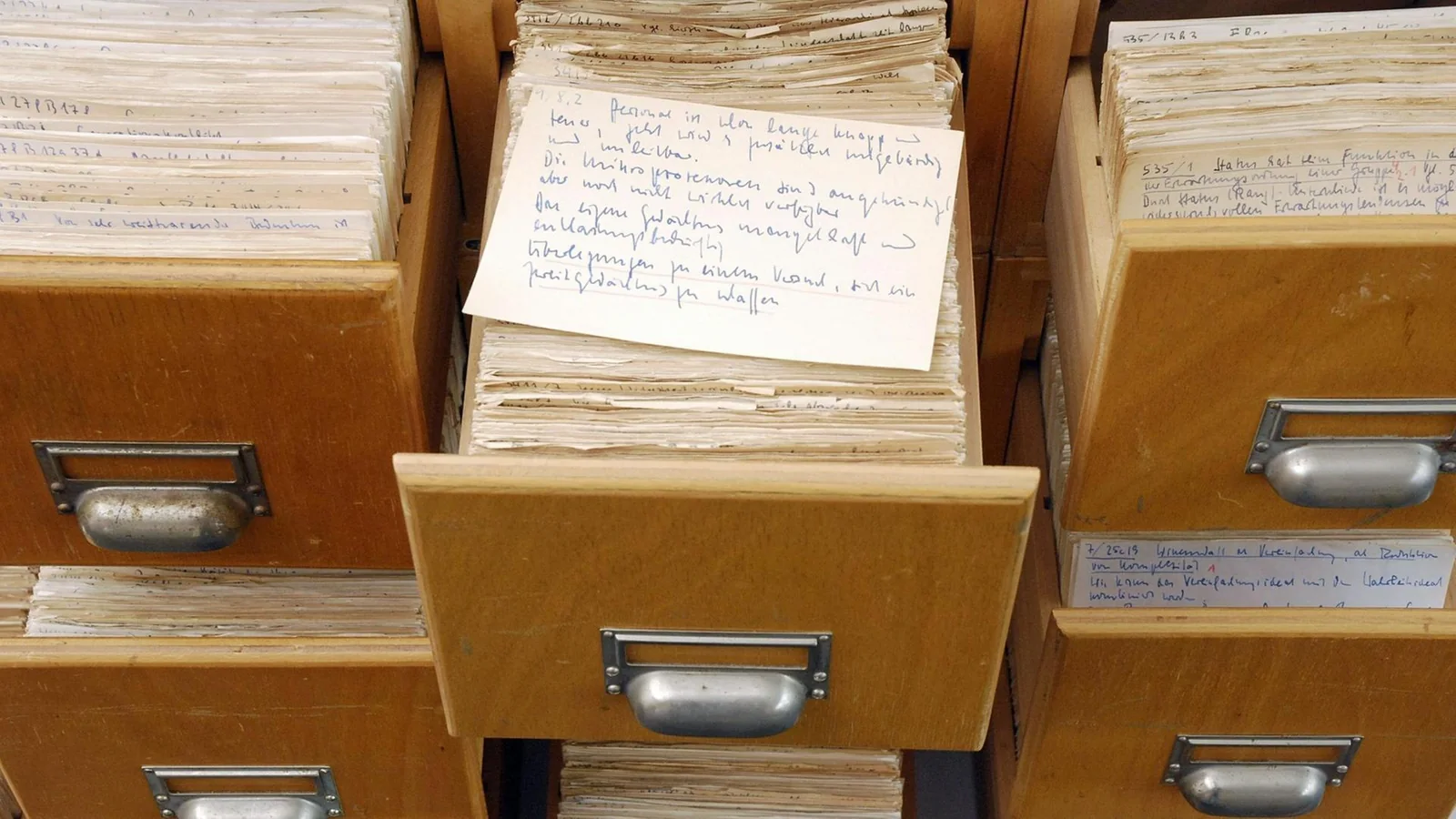
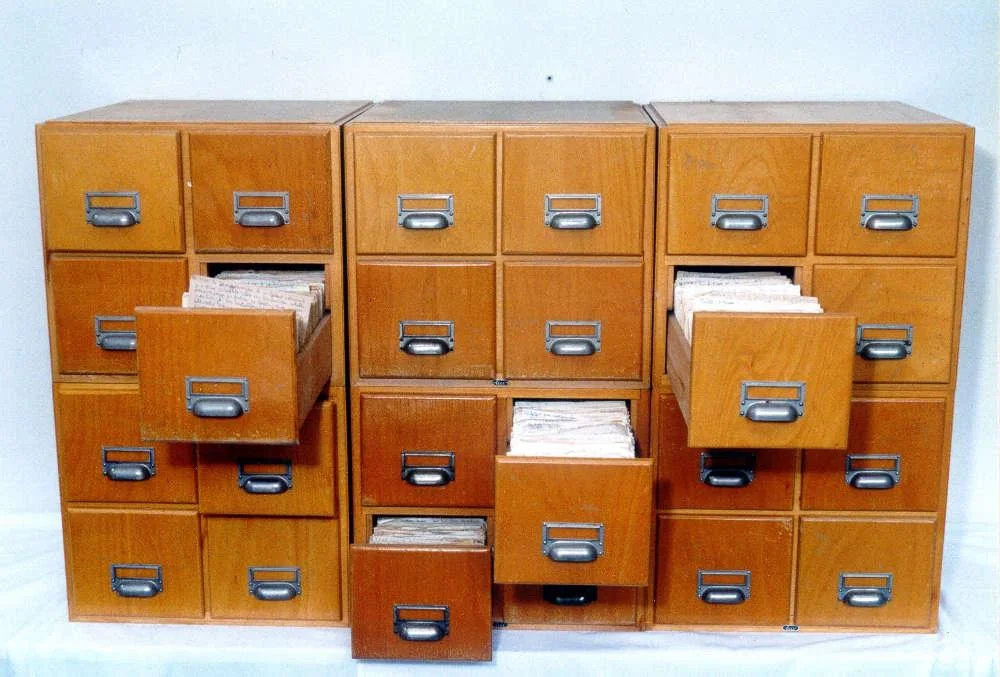
The idea is quite simple: imagine a box filled with small cards. Each card holds an idea, a question, something you've learned, or a thought of your own. You organize these cards using numbers, indexes, and references to other cards.
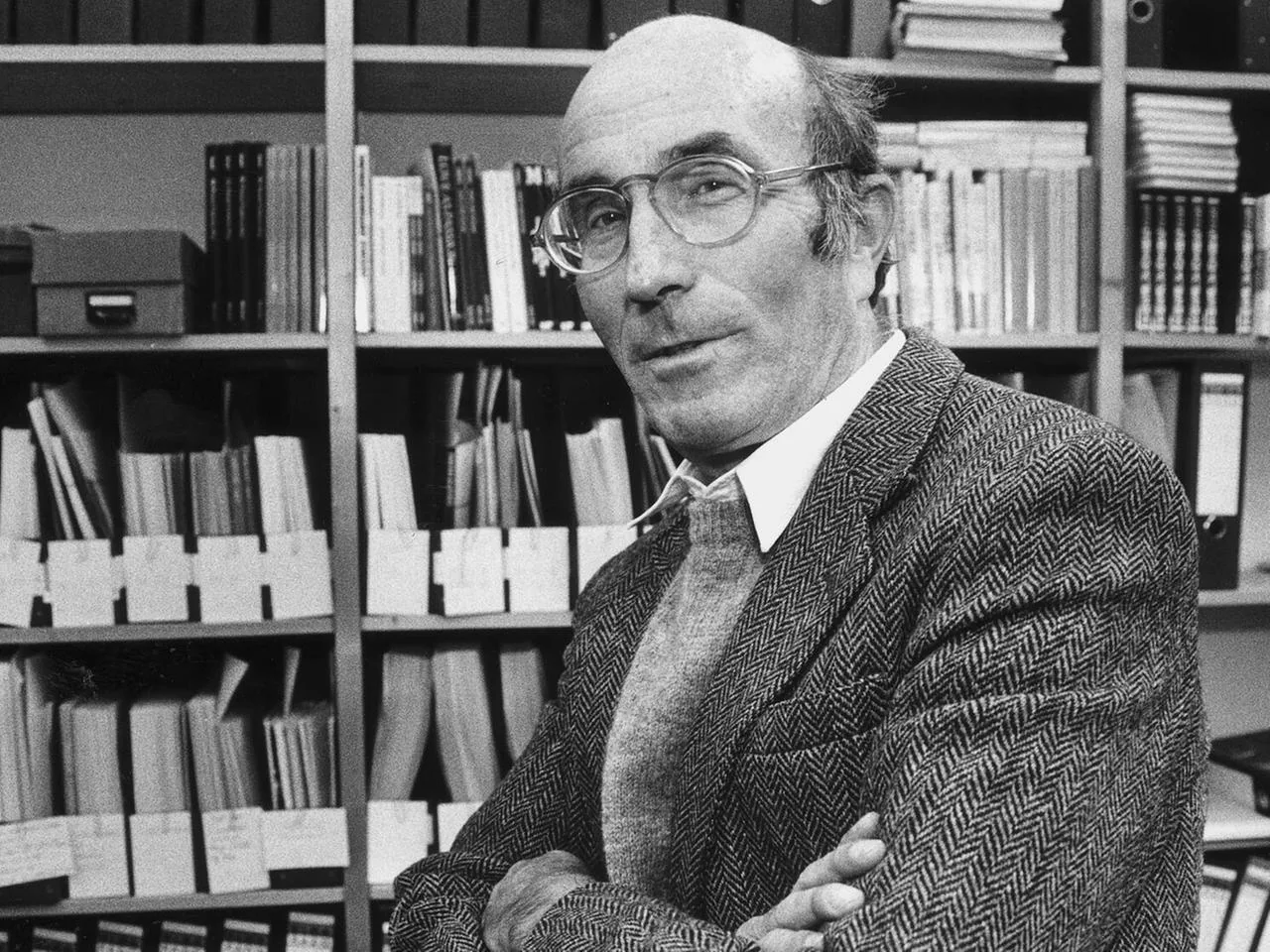
The method is perhaps best known through the work of German sociologist Niklas Luhmann (1927–1998). According to the archive project at Bielefeld University, his collection eventually grew to around 90,000 cards.
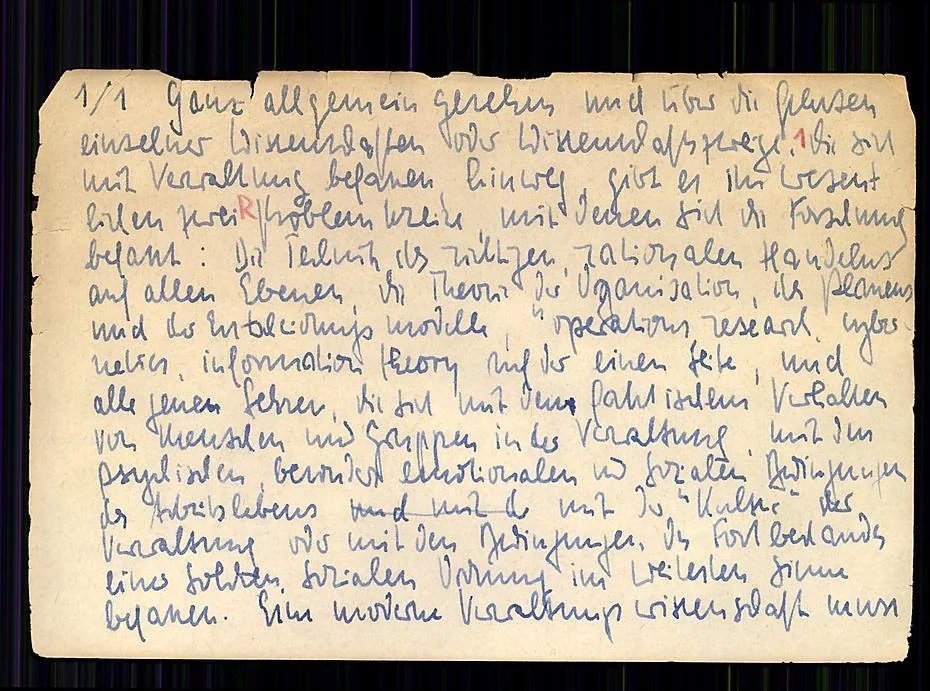
Here's an example of one of his cards:
(Image: Wikimedia Commons — Category:Zettelkasten)
A rough translation of the card:
"On the whole, beyond the boundaries of any single discipline or field of knowledge, no research effort has yet managed to bring together the scattered contributions of different disciplines across the full range of existing problems. These include organization theory, planning and decision-making models, operations research, cybernetics, information theory, as well as theories concerned with people's actual behavior in administrative systems, individual psychological responses, and the internal 'culture' of administrative institutions. An administrative science (Verwaltungswissenschaft) has gradually taken shape along several different paths..."
At its heart, the Zettelkasten method has three basic principles.
First, break things down. Instead of keeping large blocks of information together, separate them into smaller units, each expressing one idea that can be understood on its own.
Second, make connections. Link these individual ideas to other notes whenever you find a meaningful relationship between them.
Third, let a network grow. As you keep adding notes and connecting them, they gradually form a network of knowledge that can continue to expand.
2. How to Use the Zettelkasten Method
This may sound a little abstract, so let's work through an example.
Imagine you're dealing with a familiar problem: How can I stop procrastinating and become better at getting things done?
If you keep a traditional diary, you might write something like:
"I procrastinated again today. I feel terrible about it. I really need to change next time."
Then you close the notebook—and find yourself doing exactly the same thing the next day.
With the Zettelkasten method, you would approach the problem a little differently.
Let's say you create a collection called The Action Observation Room.
Step 1: Break things down
Start by recording individual observations and ideas on separate cards.
Card A — Personal observation
I've noticed that whenever I need to write my weekly report, I end up scrolling through my phone for two hours before I even start. Maybe it's not that I'm lazy. I'm afraid I won't do a good job, and the thought of getting started feels overwhelming.
Card B — Something I learned from reading
In Mini Habits, the author suggests that if you want to start running, you could make your goal as small as running for just one minute on the first day. Make the goal so small that it's almost impossible to fail.
Card C — A physical factor
When I don't sleep well, I can barely concentrate the following morning.
Card D — A practical technique
The Pomodoro Technique—working for 25 minutes, then taking a five-minute break—often helps me get started.
Each card captures one distinct idea or observation. It doesn't need to tell the whole story. The important thing is that it makes sense on its own.
Step 2: Start making connections
Once you've written down these cards, look for relationships between them. You can also create index notes to explain why certain cards belong together.
For example, you might connect Card A with Card B and write a short note:
"Maybe I procrastinate because the task feels too big. Making the goal smaller, as suggested by the mini-habits approach, could help me get past that initial resistance."
You could also connect Card A with Card D.
If the hardest part is getting started, perhaps you don't need to think about finishing the entire report. You could simply set a 25-minute timer and tell yourself to work until it rings. Then take a break.
The point isn't to collect more tips. It's to see whether something you've already recorded might help explain—or solve—a problem you're facing now.
Step 3: Let the network grow
Over the next few months, you keep adding cards to your collection.
The next time you find yourself procrastinating badly, or even getting frustrated with yourself, you don't necessarily need another motivational quote from the internet.
Instead, you can pull out the relevant cards and spread them out in front of you.
You might find that they offer different perspectives on the same problem:
- Physical factors: Card C reminds you to check whether you've been sleeping poorly. Maybe your lack of concentration isn't simply a matter of willpower.
- Psychological factors: Cards A and B suggest breaking a daunting task into something as small as "just one minute." The goal is to lower the barrier to getting started.
- Practical techniques: Card D reminds you that a Pomodoro timer might help you ease into the work.
But the interesting part doesn't stop there.
Over the past few months, whenever you noticed yourself procrastinating—or, on the contrary, becoming completely absorbed in something—you kept recording what happened.
Card E — A moment of procrastination
"I had a PPT due on Monday, but I put it off until 10 p.m. on Sunday before finally opening my laptop."
Card F — Another moment of procrastination
"My boss asked me to submit a weekly report on Wednesday. I didn't start writing it until Wednesday afternoon."
Card G — Something I kept putting off
"I wanted to learn how to make short videos, so I saved a bunch of tutorials. Three weeks later, I still hadn't watched a single one."
Card H — A moment of complete absorption
"This weekend, I spent six hours building Lego and writing a novel. I got so absorbed that I completely lost track of time."
Now put these cards side by side and take a closer look. What do you notice?
- Look at E (the PPT) and F (the weekly report). Both are tasks you have to hand over to someone else.
- Look at G (making short videos). It's something you want to do for yourself, but the eventual goal is still to publish it online for other people to see.
- Now look at H (building Lego and writing a novel). You're doing these things for your own enjoyment. There's no audience waiting to judge the result.
When you compare them, a pattern begins to emerge: E, F, and G all involve some kind of external audience—a boss, people online, or someone who will eventually see the result. H doesn't.
Step 4: Write down the new idea
You take out another card, Card I, and record what you've just noticed:
"Maybe my procrastination has less to do with how difficult a task is, and more to do with whether I'll be evaluated by someone else. When I have to deliver something to another person, I seem to encounter a lot more resistance. But when I'm exploring something just for myself, I can spend hours on it without losing interest."
This is what a Zettelkasten can do: it creates the conditions in which you begin to notice connections you might otherwise have missed.
As your collection grows, ideas that once seemed unrelated can start to make sense alongside one another. It's a little like putting together a jigsaw puzzle. You don't necessarily know what the picture will look like at first. But as more pieces find their place, the larger pattern gradually becomes visible.
Over time, your collection becomes something like a personal database—and perhaps even a companion you can turn to when you're trying to understand yourself.
You no longer have to rely on a diary that gets forgotten once it's filled, or a stream of disconnected tips from short videos. When you're facing an important decision, or simply trying to get yourself moving again, you can return to the cards you've written.
Your past experiences and the things you've learned are no longer scattered across forgotten notebooks. They've become a network you can draw on.
3. How Did Luhmann Organize His Cards?
Let's return to Luhmann's own system.
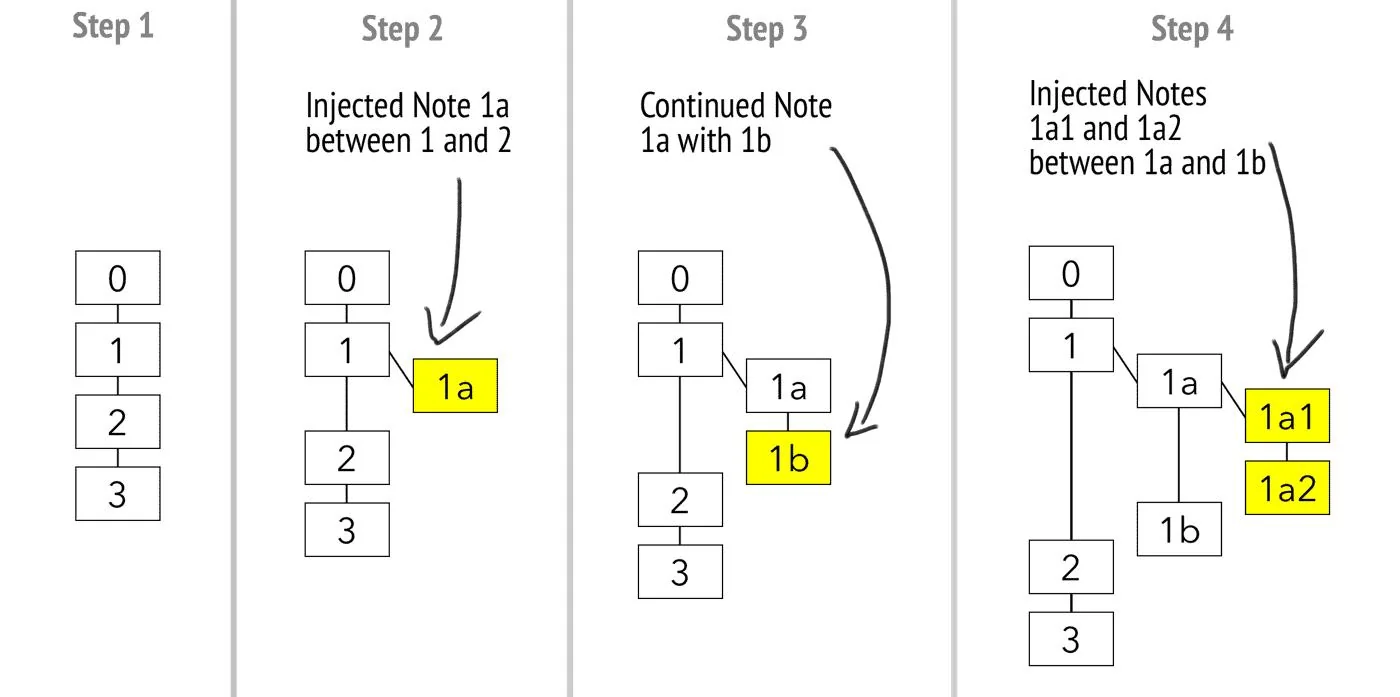
He didn't simply attach a topic label to each card. One of the more interesting parts of his method was his numbering system.
For example, a sequence might look like this:
- 1
- 1a
- 1a1
- 1a2
- 1b
These aren't ordinary numbers marking the order in which notes were written. They're a way of making room for new ideas within an existing sequence.
Imagine you have a card numbered 1.
Later, you come across a related idea that deserves its own discussion. Instead of putting it at the very end of your collection, you can insert it as 1a.
If that idea leads to another thought, you can continue with 1a1.
This means you don't have to keep adding new material to the end of the entire system. You can expand an existing line of thought right where it belongs.
More importantly, cards can also refer to other cards in completely different parts of the collection.
So the numbering system does two things: it helps you find individual cards, and it creates paths through related ideas.
The result is a system with branching structures and connections across different topics—not simply a collection of folders.
4. Was the Zettelkasten Method Invented by Luhmann?
It's worth noting that Luhmann didn't invent the Zettelkasten tradition. He was one of its most influential practitioners.
Long before his time, card-based systems for recording, classifying, and retrieving information had already been used in European academic research, libraries, and administration.
In other words, this wasn't just an unusual habit developed by one individual. It was part of a much longer tradition of organizing human knowledge.
And that's one reason the method isn't reserved for academics or researchers. Ordinary people can use it too.
5. From Paper Cards to a Digital Canvas
Of course, keeping everything on paper isn't convenient for everyone. If you'd rather work digitally, you might want to try something I've been building.
Inspired by the ideas behind the Zettelkasten method, I developed Spoor, a freeform canvas for collecting ideas, reading, and writing.
I've been using it myself, and I've found it a natural space for bringing notes, reading materials, and my own thoughts together.
If you'd like to give it a try, you can find it here:
I'd be happy to hear what you think. Feedback and suggestions are always welcome.
Email: w978109720@gmail.com
社会学家卢曼的卡片盒式笔记法:如何让积灰笔记,变成思想资产?
也许你也有过这样的经历,记笔记太多,当时随手记下的很多东西,没有组织地长成了一片杂草。
在这之后,你懒得再去阅读这些笔记,因为从这些笔记中提取有价值的信息和关联太难了。
我记了十三年的笔记,用过很多笔记软件,印象笔记、有道云、notion、obsidian、手机便签。但我第一次了解一种叫卡片盒笔记法的方法。
一、什么是卡片盒笔记法?
卡片盒笔记法,德语原词是 Zettelkasten。
Zettel:纸条、卡片。
Kasten:盒子、箱子。
它最直观的形态,是一个装满小纸片的盒子。每张纸片记录一个观点、一个问题、一段知识或一个想法。纸片通过编号、索引和相互引用组织起来。
(图片来源于卢曼档案馆:niklas-luhmann-archiv.de)
这个方法由德国社会学家卢曼(Niklas Luhmann1927—1998)发扬光大。根据比勒费尔德大学相关档案项目的整理,卢曼的卡片盒最终包含约 90,000 张卡片。
(图片来源于德国新闻网 NDR:ndr.de)
(图片来源于维基百科:Wikimedia Commons · Zettelkasten)
比如其中一张卡片是这样的:
(翻译大意)“总体而言,超越单一学科与知识领域的界限,在所有既有问题范畴中,尚无任何研究尝试能够通盘审视各个学科的分工产出——包括组织理论、计划与决策模型、运筹学、控制论、信息论,以及所有探讨人在行政体系中实际行为、个体心理反应与行政机构内部“文化”的学说。这样一门已在各种不同路径中逐渐成形的行政科学(Verwaltungswissenschaft)……”
这种笔记方法有三个特点,
第一步是原子化,先把知识拆分成可以独立理解的单元。
第二步是关联化,让不同的知识单元之间建立联系。
第三步是通过持续积累和关联,形成一个可以不断扩展的知识网络。
二、卡片盒笔记法的使用方法
这样说比较抽象,我们来举一个例子:假设我们有一个人生难题,叫【如何克服拖延症,提升行动力?】
如果按照传统的写日记或做笔记的方式,你可能在某个本子上写下:“今天又拖延了,很难受,下次要改”,然后本子一合,下次继续拖延。
但如果用卡片盒笔记法来应对这个人生课题,是这样的,你首先给自己建了一个盒子,叫【行动力观察室】。
第一步:原子化
卡片A(自我观察):我发现,每次让我写周报,我都要先刷两小时手机。原因不是我懒,而是我怕写不好,有畏难情绪。
卡片B(阅读摘抄):《微习惯》中提到:想跑步,第一天只跑1分钟就好。把目标缩小到不可能失败的程度。
卡片C(生理常识):晚上没睡好,第二天上午基本无法专注。
卡片D(工具心得):用‘番茄钟’工作25分钟,休息5分钟,能很好地启动状态。
每一张卡片都是一个纯粹的知识点或观察,不需要连贯的上下文。
第二步:关联化
卡片写好后,你开始给卡片连线、写索引:
你把 【卡片A】和 【卡片B】连了起来,在旁边写上一句:“原来我的拖延是因为目标太大(畏难),微习惯是对症的解药。”
你甚至可以把【卡片A】(畏难)和【卡片D】(番茄钟)连起来。解决畏难情绪,可以直接用番茄钟开始,告诉自己只做25分钟,然后休息一下。
第三步:网络化
随着你持续记录几个月,盒子里的卡片越来越多。
当你再次陷入严重的拖延、甚至开始自我攻击时,你不需要去网上搜鸡汤,而是把盒子里相关的卡片抽出来摊在桌上:
生理层:卡片C提醒你,先检查是不是最近没睡好(不是你的错,是生理原因)。
心理层:卡片A、B提醒你,把庞大的任务拆解成“只做1分钟”,降低启动门槛。
行为层:卡片D告诉你,用番茄钟进入心流。
在过去的几个月里,你每次发现自己拖延,或者行动力爆表时,都会如实记一张卡片,丢进盒子里:
卡片 E(痛苦场景):周一要交的PPT,我硬是拖到了周日晚上10点才打开电脑。”
卡片 F(痛苦场景):领导让我周三交的周报,我周三下午才开始写。
卡片 G(痛苦场景):“想自己研究一下怎么做短视频,教程收藏了三周,就是没点开,觉得压力很大。”
卡片 H(心流场景):“这周末我自己关在房间里拼乐高/写小说,一口气搞了6个小时,根本停不下来。”
这时候,你开始盯着它们看(这就是建立联系的过程):
你看 E(PPT)和 F(周报),发现共同点:都是要交给别人的。
你看 G(做短视频),虽然是自己想做的,但目标是要发到网上给别人看的。
你看 H(拼乐高/写小说),是自己玩自己的,没有别人看。
在这个并排对比的瞬间,你发现:E、F、G 的底层都有一个“外部受众”(领导、网友),而 H 没有。
第四步:写下新卡片
你立刻拿出一张新卡片(卡片 I),写下你的顿悟:
“我发现,我的拖延并不取决于任务难不难,而取决于有没有‘外部评价’。只要是‘需要向他人交付’的任务,我就会有巨大的阻力;只要是‘自我探索/无外部评价’的任务,我就有无限的精力。”
卡片盒的作用,就是为你创造“看见联系的条件”。当卡片积累到一定数量,这种联系不是刻意推导出来的,而是像拼图一样,拼图块放对了位置,画面自己就显现了。
它变成了你的个人数据库和心理咨询师。你不需要一本写完就吃灰的日记,也不需要碎片化的短视频干货。当你需要做重大人生决策、或者需要重新振作时,你只需要抽出这些卡片,你的过往经验和智慧,就已经在盒子里为你搭建好了一张支持你的网。
我们再回到卢曼的具体方法上。
卢曼并不是简单地给每张卡片贴一个主题标签。他采用了一套非常有意思的编号体系。
例如:
- 1
- 1a
- 1a1
- 1a2
- 1b
这不是普通的时间顺序编号,而是一种可以不断向既有位置插入新想法的结构。
假设你有一张卡片,编号为 1。
后来你发现一个与它相关、但值得单独展开的想法,就可以把它放在 1a。
如果 1a 又产生了一个新观点,就可以继续建立 1a1。
这样,你不必每次都在整个系统的最后增加内容。
更重要的是,卡片还可以引用其他位置的卡片。
因此,编号既帮助定位,也帮助建立知识之间的路径。
它同时拥有树状分支和跨主题关联,而不是简单的文件夹结构。
(图片来源于 zettelkasten.de:zettelkasten.de/introduction)
值得一提的是,Zettelkasten 并不是卢曼发明的,但是他把他发扬光大了。因为作为卡片收集与索引系统:早于卢曼很多年,欧洲学术研究、图书馆和行政管理中早就有使用卡片记录、分类和检索资料的传统。这说明他不是某一个人心血来潮的实践,而是人类知识管理的共同实践。因此,这个方法也适合普通人去做。
如果大家不方便纸质记录,想电子记录的话,可以试试我做的产品。
基于卡片盒笔记方法理论,我开发了一个自由画布的产品,服务于记录和写作,体验下来确实好用,大家如果要试试可以用以下链接访问,欢迎反馈意见和建议给我。
产品链接:https://spoor.ink/
我的邮箱是:w978109720@gmail.com